A sunny outdoor invitation: decide whether the setting fits the baby
An outdoor invitation can be enjoyable without requiring a baby to remain in a setting planned around adults’ tolerance of sun and heat. Review the actual shade, timing and ability to leave before accepting the format. The practical goal is an arrangement suited to the baby’s needs, with individualized care questions left to the clinician rather than improvised from a photograph of a canopy.
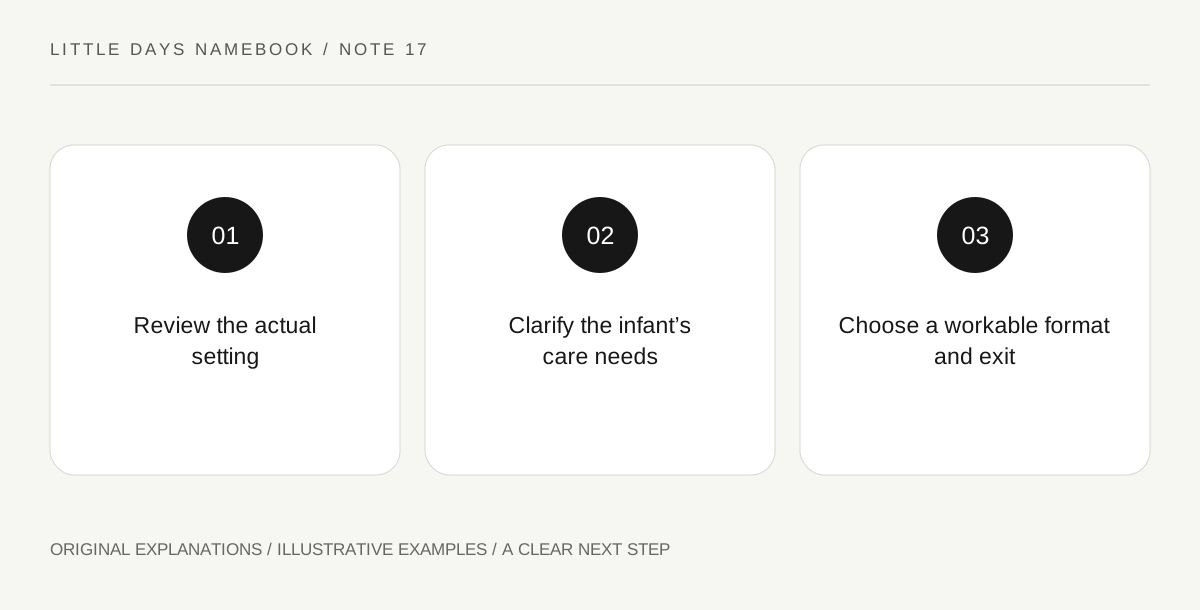
Original explanatory diagram. Read the full method and limitations below.
Start with infant-specific guidance
AAP advises keeping babies out of direct sunlight and using shade, with particular caution for babies younger than six months. Use that guidance to question the setting rather than beginning with a shopping list. An adult’s comfort or a cloudy-looking photograph does not establish the baby’s protection. Ask the pediatrician about the actual infant’s needs and any relevant concerns. This article does not prescribe a sunscreen product, application schedule or a safe heat-exposure interval. It organizes the decision about whether the proposed outing format is workable.
Ask the host about the real setting
Clarify where shade is available, how it changes through the gathering and whether there is an appropriate alternative space. A vague statement that there will be an umbrella may leave important questions unanswered. Explain what arrangement you need without making the host responsible for a medical assessment. If the event cannot support the baby’s care needs, a shorter visit, another time or declining is a legitimate response. The invitation does not create an obligation to make every outdoor setting work.
Use equipment only as intended
Read the actual manufacturer’s instructions for any stroller shade or other item being considered. Do not improvise a covered enclosure or modify equipment because a social-media image looks effective. A product label or photograph cannot establish the whole environment around the baby. Keep an attentive responsible adult involved and respond to concerns through appropriate care advice. The planning question is whether the complete arrangement fits the baby, not whether owning one accessory can compensate for an unsuitable setting.
Give departure a real place in the plan
Arrange transport and communicate that the family may leave when needed. Do not make the baby’s attendance depend on staying until a group photograph or a host’s final activity. A companion can help with practical departure tasks while the responsible caregiver attends to the baby. Finish with a clear decision and any unanswered question rather than an optimistic promise that the setting will probably be fine. A considerate outdoor plan can include choosing a different meeting format that lets everyone share time without pushing the infant through an adult schedule.
Illustrative family example
Illustrative invitation: parents ask a host about actual shade and an alternative space before accepting a garden gathering. The answers leave the baby’s needs unresolved, so they propose a shorter indoor visit on another day. They do not buy an improvised cover to force the original plan or promise to remain for a scheduled photograph. The decision follows infant-specific guidance and their clinician’s advice.
Questions that come up
Does one shade accessory establish that any outing is suitable?
No. The actual environment, baby’s needs and item instructions all matter. Ask appropriate professionals about individual concerns rather than relying on a product photograph.
Must a family attend in the format the host first suggested?
No. A shorter visit, different setting or polite decline can be the arrangement that fits the baby. Participation need not override care needs.
References and scope
These sources support the factual background. Examples and exercises are original illustrative teaching material. References do not imply endorsement.
- AAP: Baby Sunburn Prevention Tips — Infant-specific sun/shade guidance and pediatrician consultation; no product endorsement, dosing or exposure-time guarantee.