Two parents remember the naming moment differently: keep both versions
One parent remembers a name appearing in a letter; another remembers first discussing it on a walk. A family keepsake does not need to force those memories into one polished scene. Preserve each recollection with its speaker and uncertainty, letting the difference become part of the story rather than treating it as a dispute the child must eventually solve.
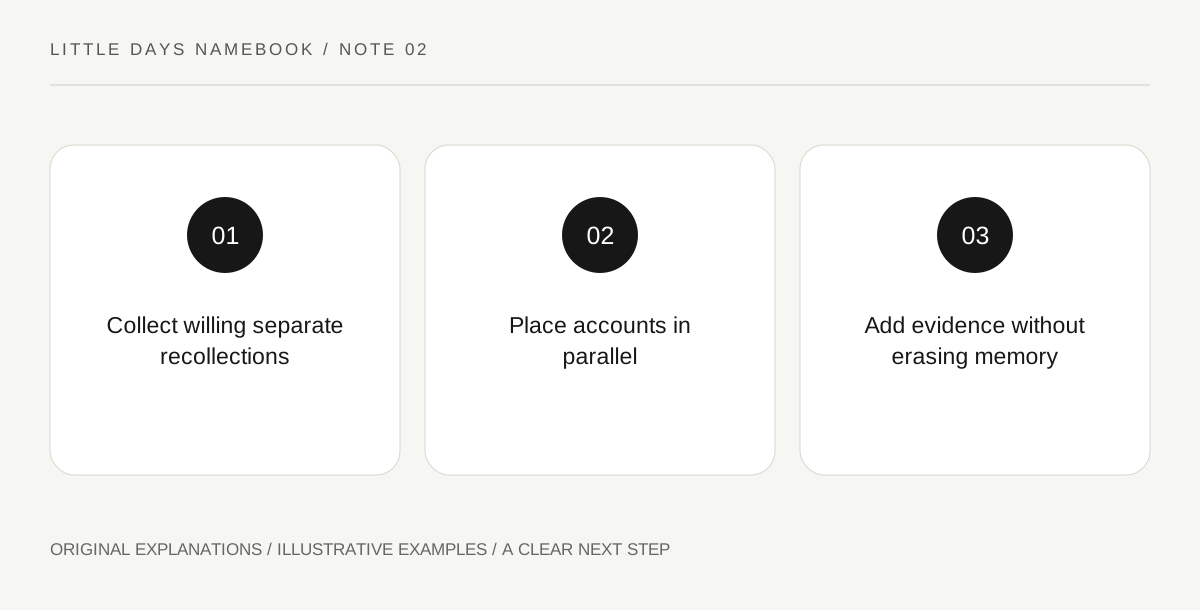
Original explanatory diagram. Read the full method and limitations below.
Give recollection a named source
The Smithsonian’s oral-history guidance distinguishes the value of remembered stories from a guarantee that every detail is historical fact. Apply that modest principle to a naming memory. Ask each willing adult what they remember and attach their account to them. A sentence beginning one parent remembers carries a different kind of claim from the name was first suggested on this exact day. The first can remain accurate as a record of recollection even when the sequence is uncertain or another person recalls it differently.
Collect the accounts separately first
For this original exercise, invite each adult to write a few private sentences before reading the other version. Ask about a setting, a conversation and a feeling they remember, allowing approximate dates and gaps. Do not supply a preferred answer or insist that an uncertain person fill every prompt. The exercise is not a forensic interview. It simply keeps one confident account from becoming the script everyone else feels expected to repeat. Participation and later sharing should remain voluntary.
Use a parallel-page layout
Place the two accounts beside each other with speaker labels and the date they were written. Mark a shared detail only when both actually supplied it. Keep differing details in their respective paragraphs rather than averaging them into an invented compromise. If a document later clarifies a date, add a note identifying that evidence; do not silently rewrite the original memory. The page can then show both what people recall and what a particular record establishes without asking either source to answer every question.
Leave the keepsake free of a verdict
End with what the adults agree they wanted to preserve, such as affection for the child and enjoyment of the choice, if those are genuinely their views. Avoid assigning the child the job of deciding which parent remembered correctly. A shareable version can be shorter and omit private family details with the speakers’ agreement. The purpose is an honest, generous memory object. A difference in recollection can make it more human and specific than a seamless scene assembled from details nobody actually remembered together.
Illustrative family example
Illustrative parallel page: one fictional parent remembers reading the option in a note, while the other remembers saying it during a walk. Each account is labeled and dated when written. Both remember being pleased, so that shared feeling is noted without choosing an exact first moment. A later calendar entry clarifies one date in an added note, leaving the original recollections intact.
Questions that come up
Must a keepsake establish which account is correct?
No. It can preserve remembered experience with clear attribution. A separate factual question may need evidence, but the memory project does not require a verdict.
What if one adult does not want their account shared?
Respect that preference. A private draft or an omitted contribution is better than publishing someone’s memory beyond the audience they agreed to.
References and scope
These sources support the factual background. Examples and exercises are original illustrative teaching material. References do not imply endorsement.
- Smithsonian Folklife and Oral History Interviewing Guide: The Interview — The distinction between remembered stories and a guarantee of historical fact, and voluntary informed recording; parallel-page exercise is original.