Gifted baby clothes: organize by the garment information, not a birthday deadline
A gift labeled with an age can feel like an appointment the baby is expected to meet. Treat the label as product information to investigate, not a growth deadline. A simple current, later and ask arrangement keeps gifts visible while leaving actual fit, intended use and care directions with the garment and responsible adults.
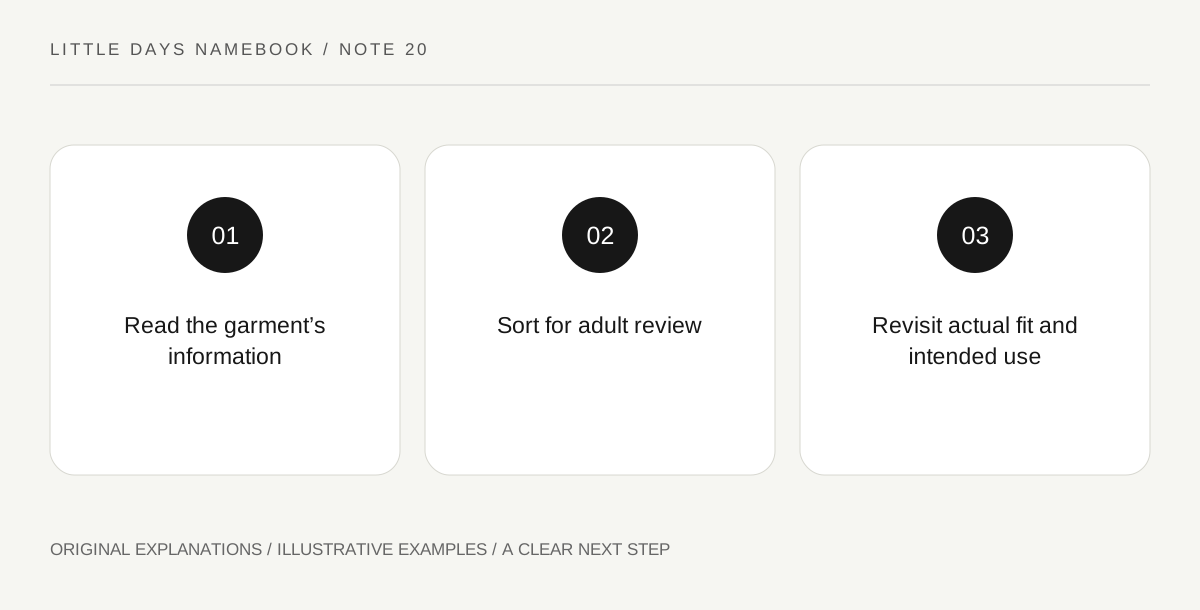
Original explanatory diagram. Read the full method and limitations below.
Read the maker’s actual sizing context
Carter’s public size chart uses height and weight alongside size labels. That is one manufacturer’s example, not a universal chart for every brand. Keep each garment’s label and relevant maker information with the item rather than grouping different products solely by a month number. This article does not assess a baby’s growth or prescribe a clothing size remotely. The practical question is whether the garment’s own information and actual fit have been considered before an age label turns into an expectation.
Use three temporary categories
Create current, later and ask categories in the adult storage area. Current means the responsible adult has checked the item for its intended use now; later means it is being kept for a future review; ask means information is missing or unclear. The categories are an original organization tool, not a safety certification. Do not place loose labels, bags or other storage materials in the baby’s sleep or play space. Keep the system where adults can manage belongings without turning packaging into an infant-accessible part of the environment.
Keep intended use and care visible
A garment’s appearance does not establish that it is suitable for every activity, including sleep. Preserve the actual intended-use and care information and ask the maker when needed. Do not cut away a necessary label merely to make a gift look neater in a drawer. If the item is kept for later, record where its information is stored. The goal is to avoid rediscovering an attractive but unexplained object months later and assuming that its gift status or familiar brand answers every use question.
Review without comparing babies
Choose an ordinary household review point that suits the adults, and revisit the later category when relevant rather than waiting for a birthday milestone. An item may never fit at a convenient season, which is a practical mismatch rather than a failure by the baby or giver. Discuss exchange or another appropriate destination according to actual retailer and recipient preferences. End with a clear location and next action for uncertain items. The gift can remain thoughtful without becoming evidence that the child should grow according to the label’s calendar.
Illustrative family example
Illustrative sorting: a family receives several outfits with different brands’ month labels. They keep the makers’ information, place clearly reviewed items in current and leave unclear ones in ask. A later garment is revisited before its printed age range because the adults are checking actual information and fit. A seasonal mismatch is handled as a gift-management issue, not a judgment about the baby’s growth.
Questions that come up
Does a month label diagnose whether a baby is growing normally?
No. A clothing label is product information, not a clinical growth assessment. Discuss health or growth concerns with the baby’s clinician.
Does a cute outfit automatically count as sleepwear?
Do not assume that. Use the actual garment’s intended-use information and appropriate care guidance rather than appearance or gift packaging.
References and scope
These sources support the factual background. Examples and exercises are original illustrative teaching material. References do not imply endorsement.
- Carter’s: Kids Clothing Size Chart — One manufacturer’s use of height/weight in sizing; no universal size recommendation, product endorsement or growth assessment.