Choosing an infant CPR course: compare the training, not the promotional headline
A course can teach a caregiver skills that a general planning article should not attempt to certify. When looking for infant CPR training, compare the exact course content, practice format and intended audience. The aim is to reach an appropriate training provider with clear questions, not to assume that watching any short video establishes readiness for an emergency.
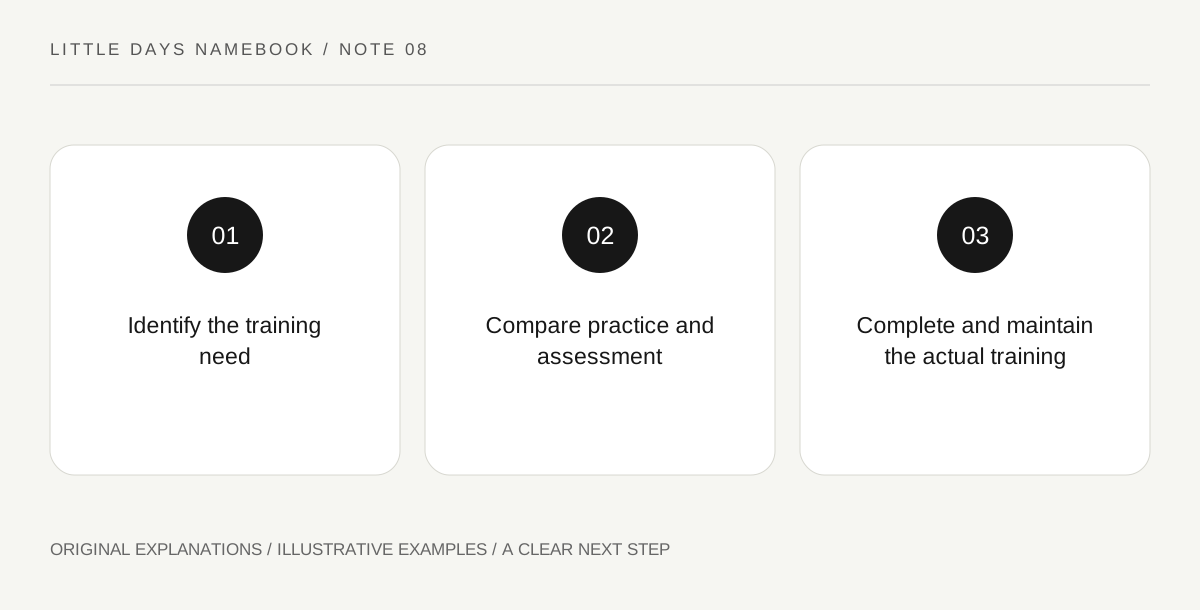
Original explanatory diagram. Read the full method and limitations below.
Name the infant-specific learning need
The American Red Cross offers parent-focused first-aid and adult, child and infant CPR training options. Begin by asking whether the specific course you are considering covers the infant skills relevant to the caregivers’ needs. A broad first-aid title does not automatically answer the age-specific question. Identify who wants to attend and whether a workplace, childcare service or another organization has a particular certification requirement. The training provider should explain the actual course and assessment rather than a family organizer guessing from a promotional image.
Compare how learning and practice occur
Ask which parts are online, instructor-led or hands-on, and what participation and assessment are required. Keep those details separate from convenience or price. A short informational resource and an assessed course may serve different purposes. This article provides no CPR sequence, compression instruction or emergency certification. Its role is to help you choose suitable training and understand what completing it actually means. If the provider’s wording is unclear, ask for the exact course description before enrolling the whole family.
Make attendance realistic
Arrange the practical support needed for adults to participate attentively. Ask the course provider whether infants may be present and what alternatives exist if caregiving prevents attendance; do not assume that a baby can accompany every session. A family may need different course dates rather than all caregivers attending at once. Keep registration, location and any preparation requirements with each person’s record. The goal is completed learning through the provider’s process, not merely a receipt showing that the family intended to attend.
Use training as an ongoing responsibility
After the course, keep the provider’s materials and any completion record in a place the caregiver can find. Follow its guidance about maintaining or refreshing skills and ask about additional learning needs. Do not ask one newly trained family member to present their memory as a substitute for everyone else’s appropriate instruction. In an actual emergency, seek local emergency assistance and follow relevant dispatcher or trained response guidance; this article is a course-selection tool. The useful outcome is a clear route to real learning with honest limits on what has been completed.
Illustrative family example
Illustrative comparison: two caregivers consider a convenient online resource and a provider-led course with stated practice and assessment. They ask which covers infant skills and whether their intended childcare role has a specific requirement. Separate attendance dates solve the caregiving conflict. The family records actual completion and refresh guidance rather than treating the purchase confirmation or a watched clip as equivalent to every type of training.
Questions that come up
Does watching a short video establish CPR certification?
Not by itself. Ask the recognized training provider what its actual course, participation and assessment requirements are.
Does this article teach emergency response steps?
No. It helps arrange appropriate training. Emergency action requires suitable training and immediate local assistance, not reliance on a general course-comparison article.
References and scope
These sources support the factual background. Examples and exercises are original illustrative teaching material. References do not imply endorsement.
- American Red Cross: CPR and First Aid Training for Parents — The availability of parent-focused adult/child/infant training options; no operational CPR instruction or certification guarantee.